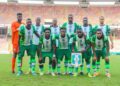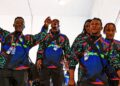


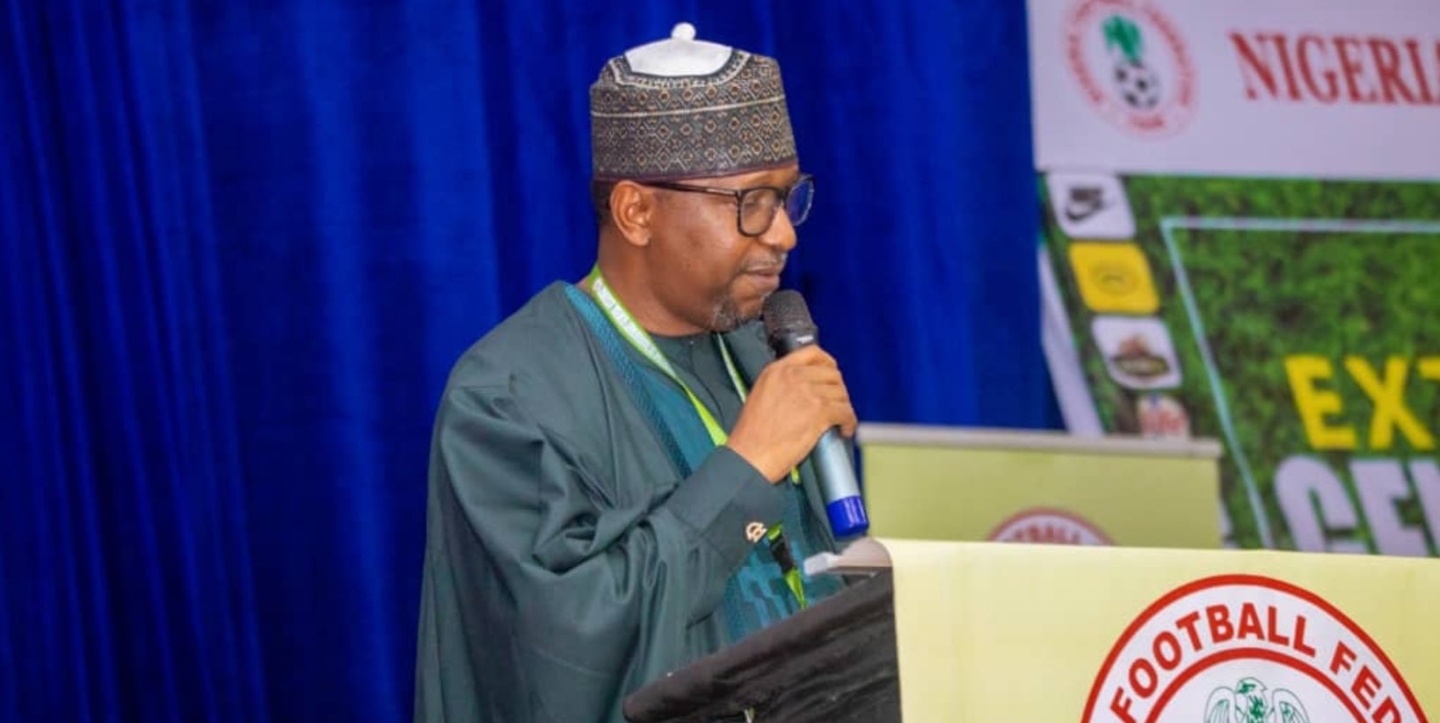


Nigerian football took a significant step toward its next leadership era on Monday, as the NFF held its Extraordinary General Assembly in Yenagoa, Bayelsa State, with representatives from all 36 states and the FCT in attendance alongside observers from FIFA and CAF, Footynaija.com reports.
The assembly approved sweeping amendments to the NFF Statutes, Electoral Code and Standing Orders, ratified a 12-member Electoral Committee drawn from the country’s six geopolitical zones, and fixed September 26, 2026 as the date for the NFF Elective Congress, which will take place in Lafia, Nasarawa State.
Ernst and Young were also approved as the federation’s new independent auditor for a four-year term, replacing PricewaterhouseCoopers after nine years of service.
Related Post
But the highlight of the day was the words of the National Sports Commission Chairman Shehu Dikko, who used his address to issue a clear warning to football administrators about the cost of standing still, per the NSC’s official statement.
Dikko’s message
Dikko did not mince his words on the state of the NFF’s existing governance framework.
“The 2010 NFF Statutes has become obsolete. It is no longer fit for purpose, it does not reflect modern governance standards, it does not sufficiently guarantee inclusivity or balanced stakeholder participation,” he said, adding that what worked in 2010 had become inadequate for Nigerian football in 2026 and beyond.
His most pointed line was a direct instruction.
“Let me state this clearly and without ambiguity: the system must correct itself. If it does not, the correction will be done for it,” Dikko said, framing the assembly as a moment of real consequence for Nigerian football.
He also cited data to back the government’s case for why football must be properly governed.
Sports contributed over one percent of Nigeria’s GDP in 2025 and created over 220,000 jobs, figures that carry weight when arguing for accountability at every level of the game’s administration.
A unanimous vote of confidence was passed on the NFF Executive Committee led by President Ibrahim Gusau, though Dikko’s address made clear that goodwill alone will not be enough going forward.