
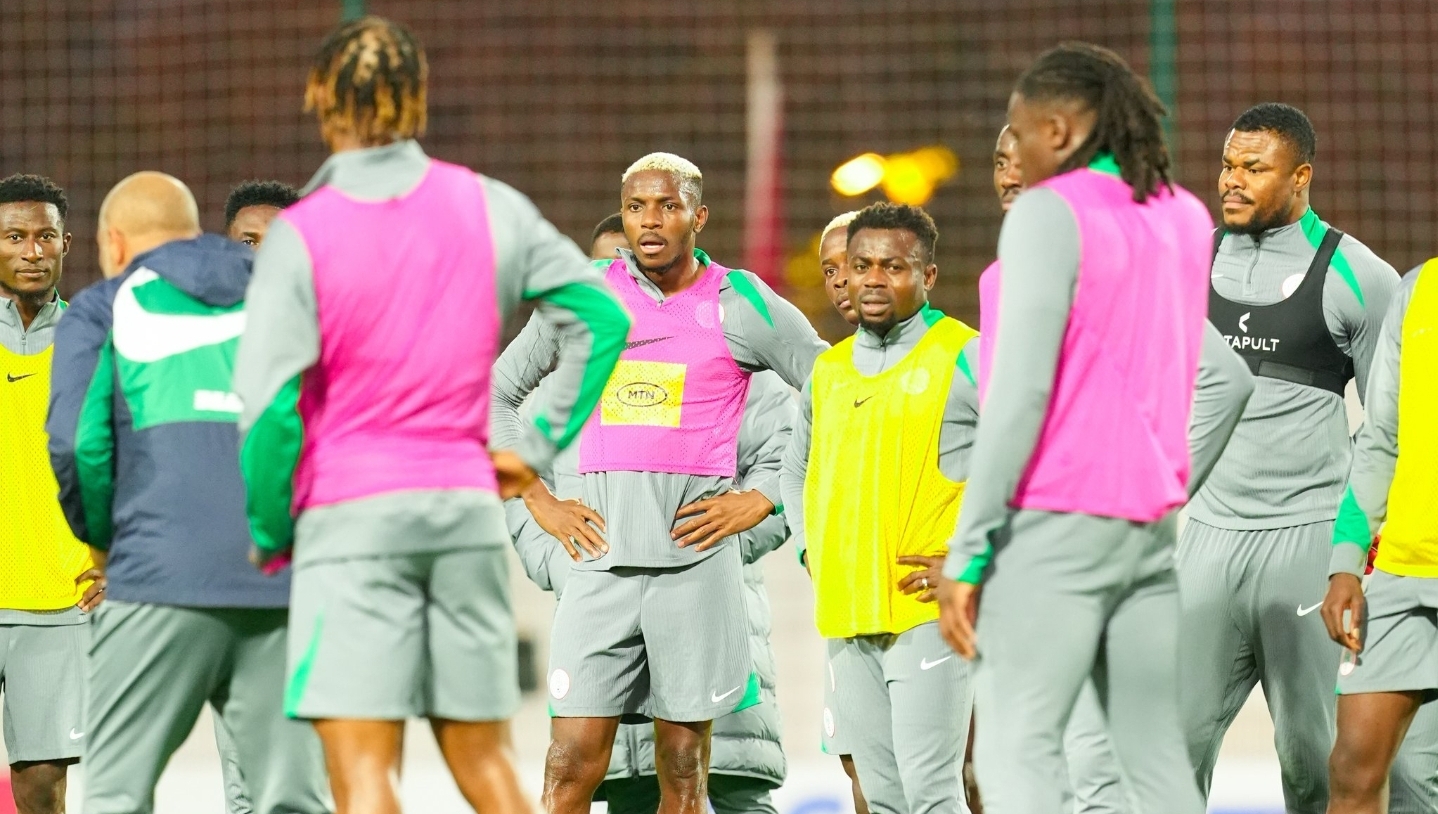


As the Super Eagles prepare to face Tunisia in their second Group C match at AFCON 2025, the tactical duel promises a contrast of styles and strategic intentions, Footynaija.com reports.
Both teams opened with wins, but their styles were noticeably different and that contrast could heavily influence how this game plays out.
Nigeria have set up in a flexible 4-2-3-1 that often shifts into a 3-2-5 in possession. Against Tanzania, Bright Osayi-Samuel pushed high on the right, while Zaidu Sanusi advanced more on the left. That allowed the Super Eagles to stretch the pitch and pin the Taifa Stars deep for long spells.




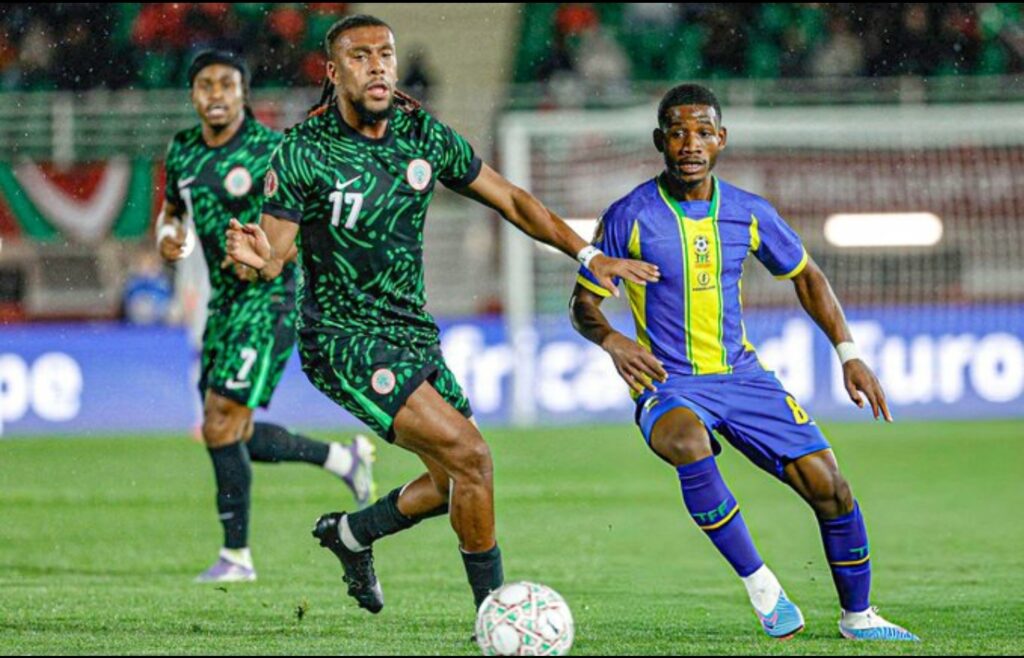
Alex Iwobi was at the heart of Nigeria’s approach. Playing between midfield and attack, he controlled the tempo, set up Semi Ajayi’s opener from a corner, and later assisted Ademola Lookman’s winner. His high number of touches and passes showed how much Nigeria relied on him to keep the ball moving before picking the right moment to break forward.
Up front, Victor Osimhen led the line with relentless movement. He didn’t get on the scoresheet, but his seven shots, constant presence in the box, and ability to pull defenders out of shape opened up space for runners like Lookman and Chukwueze. Nigeria’s attacking threat came more from sustained pressure than from quick breaks.
Defensively, Wilfred Ndidi anchored the midfield well, shielding the back four and breaking up play. Still, Nigeria looked shaky at times dealing with second balls and set pieces, a weakness exposed by Tanzania’s equaliser early in the second half.
Tunisia
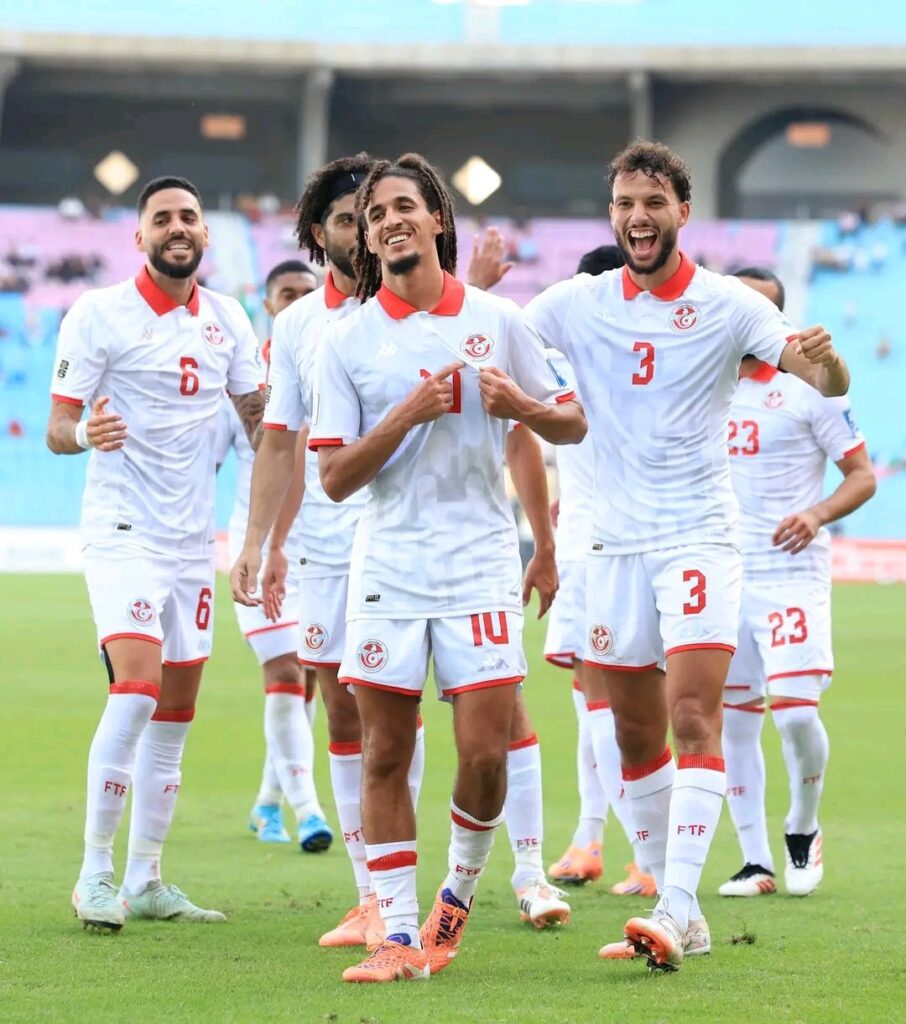
Tunisia’s approach has been more controlled. They usually line up in a disciplined 4-3-3 or 4-1-4-1, focusing on compact spacing and organisation. Against Uganda, they dominated the middle third, pressed in calculated moments, and made their chances count without needing many.
Their midfield functions as a unit, shielding the defence while giving license to attacking players to arrive late in dangerous areas. Elias Achouri’s two goals came from timing and clean execution, not constant pressure. Tunisia are content to let opponents have the ball, then press decisively when the moment is right.
In defence, the Carthage Eagles stay narrow, forcing play wide and dealing well with crosses. Unlike Nigeria, their full-backs are less forward-going, which keeps their shape solid but can reduce attacking options down the flanks.
Where the game will be decided
Midfield control will be key. Nigeria rely on Iwobi and Ndidi to dominate possession and push Tunisia back, while Tunisia look to disrupt that flow and launch quick attacks from turnovers. If Tunisia manage to close down space around Iwobi, Nigeria will need faster switches of play and earlier crosses to avoid getting stuck in unproductive possession.
Wide areas will be important too. Nigeria’s wingers are good at one-on-one situations, but Tunisia’s disciplined defense aims to double up and block those duels. On the other hand, Tunisia will look to exploit moments when Nigeria’s full-backs are caught high up the pitch, especially during quick transitions.
Set pieces could again play a role. Nigeria scored from a corner against Tanzania, while Tunisia showed efficiency from dead-ball and structured attacking phases in their opener.
This is a meeting between a Nigeria side built on attacking depth and sustained pressure, and a Tunisia team grounded in structure, timing, and tournament experience. The Super Eagles will back their individual quality to break lines, while Tunisia will trust their organisation to frustrate and punish mistakes.
Whoever sets the pace first will likely take control of Group C and send a strong message to the rest of AFCON 2025.