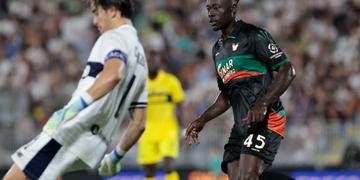

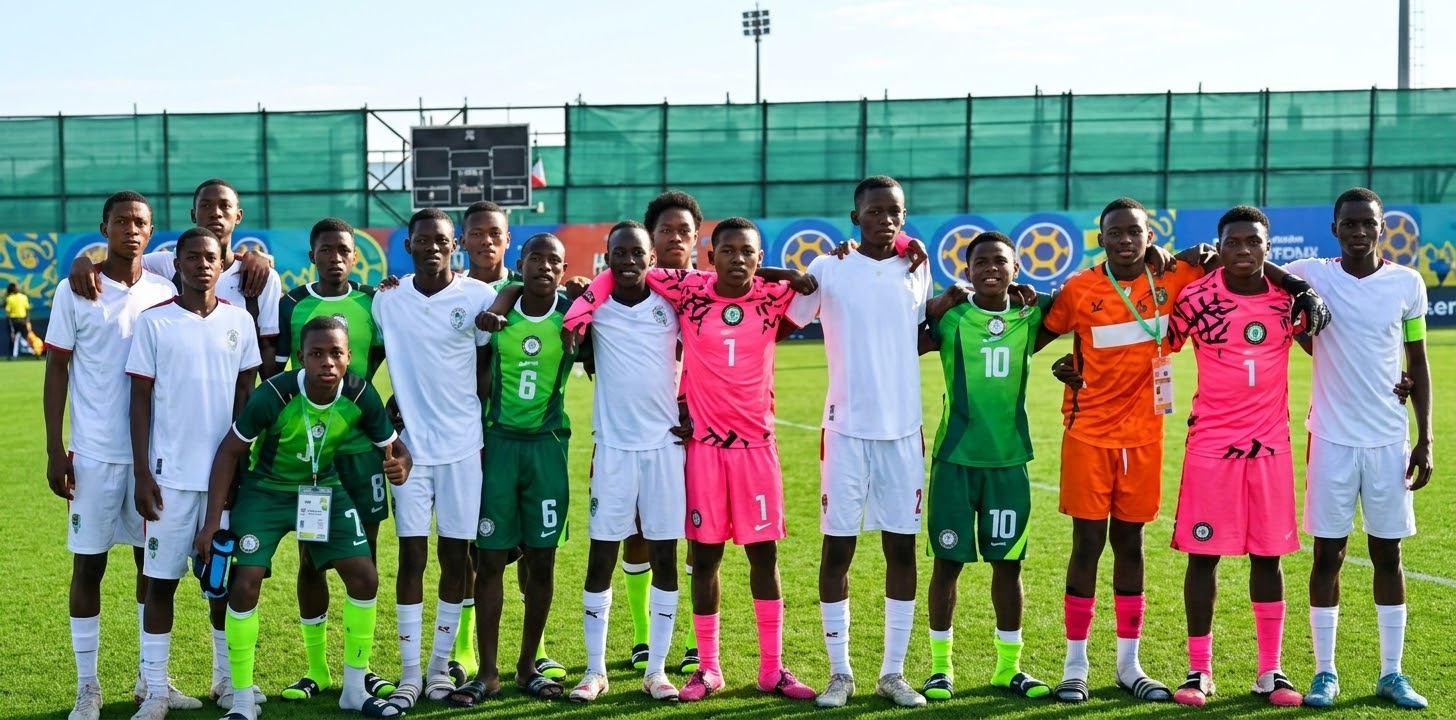


Nigeria’s Future Eagles opened a new chapter in youth international football with a 3-3 draw against South Sudan in Baku on Saturday, but their first outing at FIFA’s inaugural U-15 World Cup and Festival was also an early test of their ability to respond under pressure, Footynaija.com reports.
Patrick Bassey’s side had to come from behind twice at the Hovsan Competition Complex, sharing six goals with South Sudan in a lively Group AD contest. The result gave Nigeria a point from their first game, but it left little time to dwell on what went right or wrong.
This is not a conventional youth World Cup. FIFA created the tournament to give young players from across its membership the chance to compete internationally, including countries that rarely reach its established competitions. Of the 189 participating associations, 78 are making their first appearance at a FIFA World Cup at any level.
Related Post





A demanding schedule awaits Nigeria
The format also changes the demands on Bassey and his players. Matches are played eight-a-side over two 20-minute halves, with teams scheduled to play five group matches across three days. Nigeria must face Jordan and The Gambia on Sunday before completing the group stage against Cyprus and Pakistan on Monday.

That schedule makes recovery, concentration and the use of the 14-man squad important considerations. Nigeria cannot afford to carry the frustration of the South Sudan draw into the next fixture, especially with two games separated by only a few hours on Sunday.

FIFA has designed the competition to give every team further matches after the opening group phase. Results determine which of six performance tiers a team enters, with each tier having its own winner. The format is intended to give young players more competitive experience rather than send teams home after an early defeat.
For the Future Eagles, the immediate task is to turn their opening point into a stronger run through the group. Their draw with South Sudan has kept them in the contest, but the next two fixtures will quickly show how well they can adjust to the tournament’s demands.