




The Nigeria Football Federation (NFF) administration led by Ibrahim Musa Gusau came into office in late 2022 with the responsibility of rebuilding Nigerian football and keeping the country’s national teams among Africa’s strongest, Footynaija reports.
Almost four years later, the results across the major men’s and women’s teams tell a different story. The Super Eagles missed the 2026 FIFA World Cup. The Super Falcons suffered a painful WAFCON exit that has put their next World Cup qualification route at risk. Nigeria’s once-famous youth teams have also struggled to reach major tournaments, while questions over coaching decisions and the management of women’s football have continued to grow.
These are five major failures that have defined the Gusau-led NFF administration.
1. Super Eagles’ failure to qualify for the 2026 FIFA World Cup
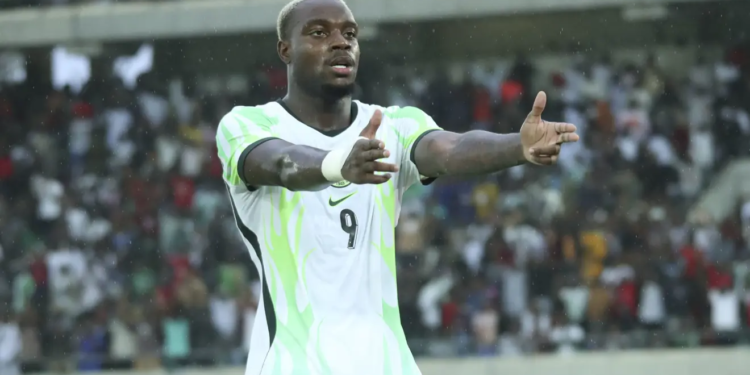
Missing the 2026 FIFA World Cup is the clearest sporting failure of the Gusau administration because Nigeria had a strong enough squad to challenge for a place at the tournament.
The qualification campaign began badly under José Peseiro before Finidi George was appointed as his successor. Finidi’s time in charge lasted only a short period, and Nigeria’s failure to collect enough points early in the campaign left the team chasing the leaders. The NFF’s juggling of three coaches in eight months unarguably had the most significant impact on the Super Eagles.
Nigeria eventually finished behind South Africa and were forced into the African playoff route. The Super Eagles then lost to the Democratic Republic of Congo on penalties, ending their hopes of reaching the expanded 2026 World Cup in the United States, Canada and Mexico.
NFF General Secretary Mohammed Sanusi later admitted that the timing of Eric Chelle’s appointment was a major issue. He argued that an earlier appointment could have changed Nigeria’s qualification campaign. The financial cost was also enormous, with estimates putting the lost revenue to the federation and wider Nigerian economy at about ₦15 billion.
More damaging, however, was the sporting cost. Nigeria’s absence from the World Cup removed the country’s biggest international football stage from the calendar and left the Super Eagles facing a long rebuilding process.
Related Post




2. Super Falcons’ WAFCON collapse and the danger to their World Cup record
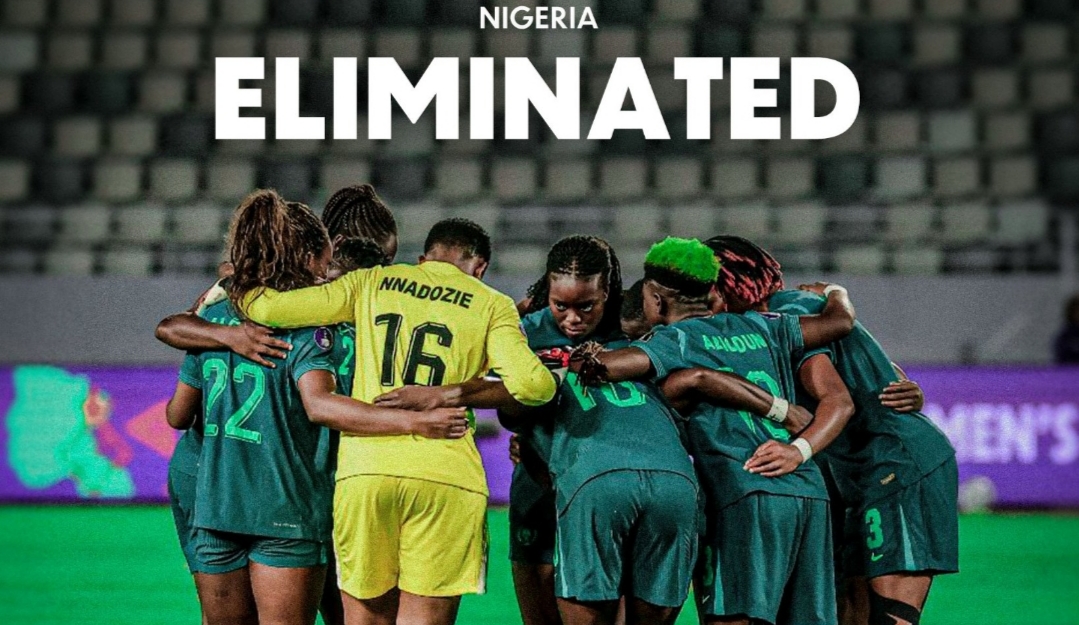
The Super Falcons entered the 2026 Women’s Africa Cup of Nations in Morocco carrying the weight of their history. Nigeria have won the women’s continental title more than any other country and went into the tournament aiming for an 11th crown. Instead, their campaign ended in the quarter-finals after a 1-0 defeat to Cameroon.
The loss was particularly painful because Cameroon had been one of Nigeria’s familiar rivals on the continent, making the quarter-final another tense West African contest. Nigeria had already shown signs of difficulty during the tournament. In the group stage, the Falcons lost 3-2 to debutants Malawi, an unprecedented defeat, and only narrowly edged Zambia. The Super Falcons’ 6-2 win over Egypt papered over the noticeable cracks in the team before the loss to Cameroon shook Nigeria awake.
With the quarter-final defeat to Cameroon, Nigeria will not reach the WAFCON semi-finals, a stage that would have provided a direct route toward the 2027 FIFA Women’s World Cup. Instead, the Falcons now face a much harder qualification route through the repechage system to keep their record of appearing at every FIFA Women’s World Cup alive.
This was not unexpected, though, as the Super Falcons’ preparations for the WAFCON were shabby at best. The result is a sharp fall from a team that has traditionally set the standard in African women’s football.
3. The collapse of Nigeria’s U17 and U20 pathway
Nigeria’s reputation in world football was built partly through its youth teams. The Golden Eaglets have won the FIFA U17 World Cup five times, while the Flying Eagles have produced generations of players who later became Super Eagles stars.
That development pathway has suffered serious setbacks under the current NFF administration. The Golden Eaglets have failed to qualify for three consecutive FIFA U17 World Cups. Their latest setback came during the WAFU Zone B qualification process, where Nigeria could not secure the result needed to reach the continental stage.
That means another generation of young Nigerian players has missed the chance to face the best teams in the world at U17 level.
The situation has also affected the Flying Eagles. Nigeria’s U20 team missed out on the U20 AFCON and, as a result, lost the opportunity to qualify for the FIFA U20 World Cup. The latest disappointment came at the WAFU B U20 Championship in Côte d’Ivoire, where Nigeria suffered a 4-1 defeat to Burkina Faso in the final.
The result exposed the gap between Nigeria’s traditional youth-team reputation and its recent results. Missing youth tournaments is not simply about losing medals. It means fewer competitive matches for young players, less exposure to international football and a weaker route from the youth teams into the Super Eagles.
4. Uncertainty and delays over coaching appointments
Coaching decisions have also become a major problem under the Gusau administration. Nigeria have moved through several coaches and coaching arrangements instead of building a clear long-term technical plan.
Peseiro’s spell with the Super Eagles was followed by Finidi George, whose time in charge lasted only a few weeks. The NFF later turned to Eric Chelle as Nigeria’s World Cup qualification situation became increasingly difficult.
The timing of these decisions became an important part of the criticism. Chelle was eventually given the responsibility of leading the Super Eagles, but Nigeria were already fighting to recover from points dropped earlier in the qualification campaign.
The NFF’s own General Secretary, Mohammed Sanusi, later said Nigeria could have qualified for the World Cup if Chelle had been appointed earlier. That statement is significant because it points to a problem within the federation’s decision-making process rather than placing the entire blame on the players.
The NFF eventually extended Chelle’s contract in June 2026 and doubled his monthly salary to $100,000. He was also handed responsibility for the U23 Olympic team, the Dream Team. The question is why a coach trusted with such a wide role was not brought in early enough to have a full qualification campaign with the Super Eagles. Nigeria’s failure to qualify has made the issue even harder to ignore.
5. Failure to build stronger support around women’s football
Nigeria’s women’s teams have continued to produce talented players, but the support structure around them has often failed to match their level of talent. The Super Falcons remain one of Africa’s most recognised women’s teams, while the Falconets have traditionally been one of Nigeria’s strongest youth sides.
Yet preparation has repeatedly become an issue. International windows are important because they give national-team coaches time to bring players together, introduce younger players and build tactical understanding before major tournaments.
The lack of enough organised international matches has made that work more difficult. The Falcons entered the 2026 WAFCON needing to compete against countries such as South Africa, Zambia and Morocco, all of whom have invested heavily in women’s football.
Nigeria’s traditional advantage can no longer be taken for granted. South Africa won the 2022 WAFCON, Morocco reached the final in that tournament and Zambia have become a stronger force in recent years. The gap has narrowed while Nigeria’s preparation problems have continued.
The pressure has also been felt directly by players, who have at different times raised concerns about the federation’s handling of camps, bonuses and other administrative matters. Nigeria still has some of Africa’s best female footballers, including Rasheedat Ajibade, Chiamaka Nnadozie, Esther Okoronkwo and Jennifer Echegini among others. The problem is turning that individual talent into a consistently well-prepared national team.
The Gusau administration therefore faces a difficult question. How can Nigeria continue to dominate African women’s football when the countries chasing the Falcons are improving their systems and closing the gap?
Nigeria has never lacked football talent. It has rather struggled to create the stable planning, coaching structure and youth development system needed to turn that talent into sustained success. And with the Gusau-led NFF, those incompetencies have produced more failures than successes.