


Related Post



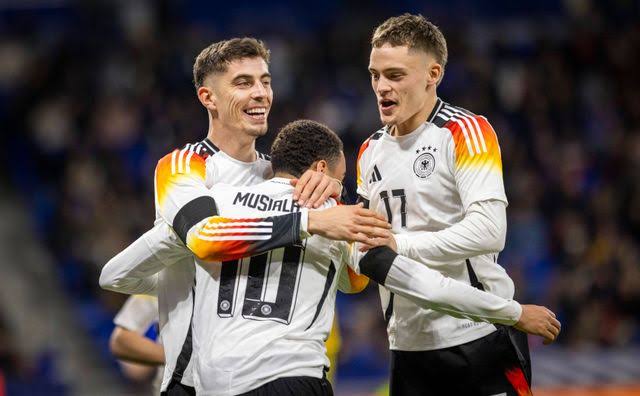
As thunderstorms raged over Signal Iduna Park in Dortmund, Kai Havertz’s penalty and Jamal Musiala’s strike propelled the hosts into the quarter-finals, leaving Denmark to rue missed chances and pivotal calls.
Here are the five key takeaways from a match that kept fans on the edge of their seats.
1. Weather Chaos in Dortmund
In a match already tinged with tension due to its knockout nature, the elements added an extra layer of drama. Thunderstorms in the Ruhr region led to a 20-minute suspension of play, ordered by referee Michael Oliver.
As rain lashed Signal Iduna Park, the delay seemed to break the rhythm of both teams, particularly Denmark, who were starting to find their stride.
This interruption undoubtedly influenced the game’s flow and might have been a factor in Germany’s eventual dominance.
2. VAR Drama Strikes Again
The modern game’s reliance on technology was front and centre in this clash. With the scoreline still goalless, Denmark’s Joachim Andersen experienced a whirlwind of emotions.
First, he thought he’d given Denmark the lead, only for VAR to rule it out for an offside in the buildup.
Moments later, Andersen was at the heart of another pivotal decision when VAR adjudged him to have handled the ball in the area.
Despite the proximity of the cross, the penalty was awarded, showcasing VAR’s relentless scrutiny and its potential to turn games on their head. Kai Havertz’s calm conversion put Germany ahead and highlighted the fine margins that can decide matches at this level.
3. Clinical Musiala Makes the Difference
Jamal Musiala’s star continues to rise, with the youngster notching his third goal of the tournament to secure Germany’s progression.
His goal, a precise finish after a clever run, demonstrated his burgeoning maturity and technical prowess. Schlotterbeck’s pinpoint pass set Musiala free, and the Bayern Munich prodigy did the rest, effortlessly dispatching his shot past Schmeichel.
This goal not only doubled Germany’s lead but also underscored Musiala’s importance to Hansi Flick’s side, with his ability to influence games growing with each performance.
4. Tactical Tinkering
Both managers opted for changes in formation and personnel, highlighting the strategic chess match at play. Julian Nagelsmann’s decision to start Nico Schlotterbeck in defence paid dividends, not least for his assist on Musiala’s goal.
Meanwhile, Kasper Hjulmand’s switch to a 3-4-3 formation, intended to bolster Denmark’s attacking options, had mixed results. While it initially provided Denmark with width and attacking thrust, it also left them vulnerable at the back, a fact Germany ruthlessly exploited.
This tactical battle within the match illustrated the depth of thought and preparation that goes into games at this level, where even minor adjustments can have significant impacts.
5. Missed Opportunities for Denmark
Denmark will rue their missed chances, particularly in the first half where Rasmus Hojlund squandered two golden opportunities. His profligacy in front of goal was a key factor in Denmark’s downfall, as converting even one of those chances could have dramatically altered the game’s complexion.
In tight knockout games, the ability to take chances when they come is crucial, and Denmark’s inability to do so left them chasing the game once Havertz put Germany ahead.
This serves as a harsh reminder of the fine margins at play in international tournaments, where one or two missed opportunities can spell the difference between progression and elimination.

As thunderstorms raged over Signal Iduna Park in Dortmund, Kai Havertz’s penalty and Jamal Musiala’s strike propelled the hosts into the quarter-finals, leaving Denmark to rue missed chances and pivotal calls.
Here are the five key takeaways from a match that kept fans on the edge of their seats.
1. Weather Chaos in Dortmund
In a match already tinged with tension due to its knockout nature, the elements added an extra layer of drama. Thunderstorms in the Ruhr region led to a 20-minute suspension of play, ordered by referee Michael Oliver.
As rain lashed Signal Iduna Park, the delay seemed to break the rhythm of both teams, particularly Denmark, who were starting to find their stride.
This interruption undoubtedly influenced the game’s flow and might have been a factor in Germany’s eventual dominance.
2. VAR Drama Strikes Again
The modern game’s reliance on technology was front and centre in this clash. With the scoreline still goalless, Denmark’s Joachim Andersen experienced a whirlwind of emotions.
First, he thought he’d given Denmark the lead, only for VAR to rule it out for an offside in the buildup.
Moments later, Andersen was at the heart of another pivotal decision when VAR adjudged him to have handled the ball in the area.
Despite the proximity of the cross, the penalty was awarded, showcasing VAR’s relentless scrutiny and its potential to turn games on their head. Kai Havertz’s calm conversion put Germany ahead and highlighted the fine margins that can decide matches at this level.
3. Clinical Musiala Makes the Difference
Jamal Musiala’s star continues to rise, with the youngster notching his third goal of the tournament to secure Germany’s progression.
His goal, a precise finish after a clever run, demonstrated his burgeoning maturity and technical prowess. Schlotterbeck’s pinpoint pass set Musiala free, and the Bayern Munich prodigy did the rest, effortlessly dispatching his shot past Schmeichel.
This goal not only doubled Germany’s lead but also underscored Musiala’s importance to Hansi Flick’s side, with his ability to influence games growing with each performance.
4. Tactical Tinkering
Both managers opted for changes in formation and personnel, highlighting the strategic chess match at play. Julian Nagelsmann’s decision to start Nico Schlotterbeck in defence paid dividends, not least for his assist on Musiala’s goal.
Meanwhile, Kasper Hjulmand’s switch to a 3-4-3 formation, intended to bolster Denmark’s attacking options, had mixed results. While it initially provided Denmark with width and attacking thrust, it also left them vulnerable at the back, a fact Germany ruthlessly exploited.
This tactical battle within the match illustrated the depth of thought and preparation that goes into games at this level, where even minor adjustments can have significant impacts.
5. Missed Opportunities for Denmark
Denmark will rue their missed chances, particularly in the first half where Rasmus Hojlund squandered two golden opportunities. His profligacy in front of goal was a key factor in Denmark’s downfall, as converting even one of those chances could have dramatically altered the game’s complexion.
In tight knockout games, the ability to take chances when they come is crucial, and Denmark’s inability to do so left them chasing the game once Havertz put Germany ahead.
This serves as a harsh reminder of the fine margins at play in international tournaments, where one or two missed opportunities can spell the difference between progression and elimination.

As thunderstorms raged over Signal Iduna Park in Dortmund, Kai Havertz’s penalty and Jamal Musiala’s strike propelled the hosts into the quarter-finals, leaving Denmark to rue missed chances and pivotal calls.
Here are the five key takeaways from a match that kept fans on the edge of their seats.
1. Weather Chaos in Dortmund
In a match already tinged with tension due to its knockout nature, the elements added an extra layer of drama. Thunderstorms in the Ruhr region led to a 20-minute suspension of play, ordered by referee Michael Oliver.
As rain lashed Signal Iduna Park, the delay seemed to break the rhythm of both teams, particularly Denmark, who were starting to find their stride.
This interruption undoubtedly influenced the game’s flow and might have been a factor in Germany’s eventual dominance.
2. VAR Drama Strikes Again
The modern game’s reliance on technology was front and centre in this clash. With the scoreline still goalless, Denmark’s Joachim Andersen experienced a whirlwind of emotions.
First, he thought he’d given Denmark the lead, only for VAR to rule it out for an offside in the buildup.
Moments later, Andersen was at the heart of another pivotal decision when VAR adjudged him to have handled the ball in the area.
Despite the proximity of the cross, the penalty was awarded, showcasing VAR’s relentless scrutiny and its potential to turn games on their head. Kai Havertz’s calm conversion put Germany ahead and highlighted the fine margins that can decide matches at this level.
3. Clinical Musiala Makes the Difference
Jamal Musiala’s star continues to rise, with the youngster notching his third goal of the tournament to secure Germany’s progression.
His goal, a precise finish after a clever run, demonstrated his burgeoning maturity and technical prowess. Schlotterbeck’s pinpoint pass set Musiala free, and the Bayern Munich prodigy did the rest, effortlessly dispatching his shot past Schmeichel.
This goal not only doubled Germany’s lead but also underscored Musiala’s importance to Hansi Flick’s side, with his ability to influence games growing with each performance.
4. Tactical Tinkering
Both managers opted for changes in formation and personnel, highlighting the strategic chess match at play. Julian Nagelsmann’s decision to start Nico Schlotterbeck in defence paid dividends, not least for his assist on Musiala’s goal.
Meanwhile, Kasper Hjulmand’s switch to a 3-4-3 formation, intended to bolster Denmark’s attacking options, had mixed results. While it initially provided Denmark with width and attacking thrust, it also left them vulnerable at the back, a fact Germany ruthlessly exploited.
This tactical battle within the match illustrated the depth of thought and preparation that goes into games at this level, where even minor adjustments can have significant impacts.
5. Missed Opportunities for Denmark
Denmark will rue their missed chances, particularly in the first half where Rasmus Hojlund squandered two golden opportunities. His profligacy in front of goal was a key factor in Denmark’s downfall, as converting even one of those chances could have dramatically altered the game’s complexion.
In tight knockout games, the ability to take chances when they come is crucial, and Denmark’s inability to do so left them chasing the game once Havertz put Germany ahead.
This serves as a harsh reminder of the fine margins at play in international tournaments, where one or two missed opportunities can spell the difference between progression and elimination.

As thunderstorms raged over Signal Iduna Park in Dortmund, Kai Havertz’s penalty and Jamal Musiala’s strike propelled the hosts into the quarter-finals, leaving Denmark to rue missed chances and pivotal calls.
Here are the five key takeaways from a match that kept fans on the edge of their seats.
1. Weather Chaos in Dortmund
In a match already tinged with tension due to its knockout nature, the elements added an extra layer of drama. Thunderstorms in the Ruhr region led to a 20-minute suspension of play, ordered by referee Michael Oliver.
As rain lashed Signal Iduna Park, the delay seemed to break the rhythm of both teams, particularly Denmark, who were starting to find their stride.
This interruption undoubtedly influenced the game’s flow and might have been a factor in Germany’s eventual dominance.
2. VAR Drama Strikes Again
The modern game’s reliance on technology was front and centre in this clash. With the scoreline still goalless, Denmark’s Joachim Andersen experienced a whirlwind of emotions.
First, he thought he’d given Denmark the lead, only for VAR to rule it out for an offside in the buildup.
Moments later, Andersen was at the heart of another pivotal decision when VAR adjudged him to have handled the ball in the area.
Despite the proximity of the cross, the penalty was awarded, showcasing VAR’s relentless scrutiny and its potential to turn games on their head. Kai Havertz’s calm conversion put Germany ahead and highlighted the fine margins that can decide matches at this level.
3. Clinical Musiala Makes the Difference
Jamal Musiala’s star continues to rise, with the youngster notching his third goal of the tournament to secure Germany’s progression.
His goal, a precise finish after a clever run, demonstrated his burgeoning maturity and technical prowess. Schlotterbeck’s pinpoint pass set Musiala free, and the Bayern Munich prodigy did the rest, effortlessly dispatching his shot past Schmeichel.
This goal not only doubled Germany’s lead but also underscored Musiala’s importance to Hansi Flick’s side, with his ability to influence games growing with each performance.
4. Tactical Tinkering
Both managers opted for changes in formation and personnel, highlighting the strategic chess match at play. Julian Nagelsmann’s decision to start Nico Schlotterbeck in defence paid dividends, not least for his assist on Musiala’s goal.
Meanwhile, Kasper Hjulmand’s switch to a 3-4-3 formation, intended to bolster Denmark’s attacking options, had mixed results. While it initially provided Denmark with width and attacking thrust, it also left them vulnerable at the back, a fact Germany ruthlessly exploited.
This tactical battle within the match illustrated the depth of thought and preparation that goes into games at this level, where even minor adjustments can have significant impacts.
5. Missed Opportunities for Denmark
Denmark will rue their missed chances, particularly in the first half where Rasmus Hojlund squandered two golden opportunities. His profligacy in front of goal was a key factor in Denmark’s downfall, as converting even one of those chances could have dramatically altered the game’s complexion.
In tight knockout games, the ability to take chances when they come is crucial, and Denmark’s inability to do so left them chasing the game once Havertz put Germany ahead.
This serves as a harsh reminder of the fine margins at play in international tournaments, where one or two missed opportunities can spell the difference between progression and elimination.